
In the year 2026, the online community is more than ever before and the intellectual property (IP) security will be a crucial survival tactic to creators. You are a blogger, YouTuber or digital artist, but it is a valuable asset. Although lots of people think that once it has been put online, it is already safe enough, the knowledge of how to deal with the specifics of copyright registration might be the difference between stealing the idea and the professional masterpiece that will hold ground in court. The knowledge of how to protect your creative work means that you are the only one who will benefit out of the hard work you have produced.
The Reality of Automatic Copyright
The most empowering facet of the law of copyright in 2026 is the fact that protection is implied the instant your work is fixed to a tangible medium. This implies that when you save a draft, export a video or even publish a blog post you are technically the owner of the copyright. There is however a difference between owning and enforcing. Although there is automatic copyright, it is usually hard to establish in a court of law in a paper trail. In most jurisdictions, the infringement cannot even be sued until after you have registered your work.
The Reason of Formal Registration
Registration is a record of ownership in the form of a public record. It offers a legal gold standard that will significantly simplify the process of defending your rights in case another person attempts to commercialize or monetize your work as an original one.
- Statutory Damages: In most jurisdictions, when you have registered your work and the infringement happens, you may claim statutory damages and these damages are usually also considerably greater than any real lost profits.
- Law Legal Goodwill:; A registration certificate is sometimes sufficient to end a dispute with just a plain Cease and Desist letter, because it shows you are ready to sue.
- International Protection: Treaties such as the Berne Convention have the advantage of making it a much easier process to protect your work in dozens of other countries once it is registered in your home country.
Registering puts you in the position of a guarded business owner as opposed to a passive creator. It is an investment in the life of your brand and it acts as a great deterrent to those who otherwise would perceive your on-line content as free to take.
How to Register Your Work: A Step-by-Step Guide
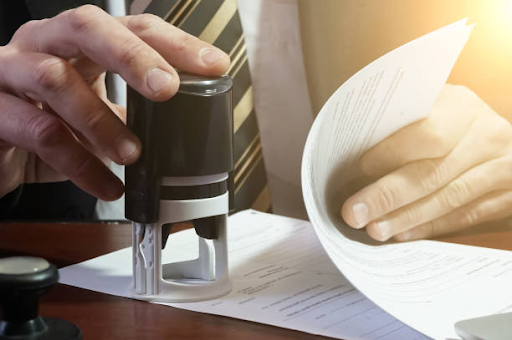
And once you have settled on formal registration, it has never been easier than it is now. To start with, you should find the right category of your work, e.g., a blog or a photo should be considered as a Literary Work or Visual Arts. Then you go to your country’s electronic portal, e.g. the eCO system in the U.S. Copyright Office, and complete the application. Within a usual turnaround period of 3 to 6 months, you will be given a formal certificate after registering your work with the payment of registration fee (normally 35 to 65 dollars) once you send it by post in the form of a deposited copy.
How to Keep Your Content Safe on Social Media
The Terms of Service in social media are not always straightforward and understandable. Although you still have the copyright to what you post, you typically give the platform a license to display your work and thus extra protection is required.
- Watermarking: Watermarking your photos and videos is a simple and no-obtrusive method of digitalizing your content, so even when someone re-shares your work and forgets to cite it, your brand name is still seen.
- Timestamping: Timestamping services offered by blockchain might offer a record of when your content was first generated, and this serves as an additional source of evidence.
- Licensing Statements: By incorporating a visible Terms of Use link in your bio or descriptions, you can clarify to the rest of the world what they are and are not allowed to do with your work.
This active strategy is needed to protect the content of social media. As of 2026, AI-based services such as YouTube’s new Likeness Detection assist creators by keeping track of their work usage, so the process of responding to an unauthorized re-upload is significantly faster.
Managing AI-Generated Content
The issue of whether AI-generated substances can be copyrighted or not is one of the most disputable of 2026. Most of the winning legitimate points of reference show that the work that was exclusively made by an AI with no significant human commitment cannot be enrolled. When you apply AI tools to support your working process, it is important to record your creative contribution. Using the example of an AI-generated base image being used and then you spend hours digitally painting on the image or editing the image the final result is far more likely to be regarded as legal protection.
Watching and Protecting Your Rights
Having a certificate does not stop infringement of your IP, you have to go out there and watch your copies being copied. A large number of creators have started relying on Content ID style tools or automated scrapers which notify them when their original text or images are used on infringing domains. In case of a violation, then first of all take the evidence with screenshots and capture the URL. Then you may send a DMCA Takedown Notice to the host of the site, and in 2026, this is normally handled within hours provided your evidence of ownership is obvious.
The Copyright vs. Trademarks Dilemma
You should never confuse them as they insure totally different sides of your business. Copyright safeguards expression of creativity, how a tale is narrated, how a photograph is captured, or how a song is composed. Trademarks in contrast, guard brand name, e.g., logo, slogans, company names that make you stand out in the crowd. Being familiar with the distinction means that you are not attempting to copyright or trademark a brand name or trademark a blog post in order to have an effective overall legal strategy.
Conclusion
People do not have the choice to learn about intellectual property anymore because the contemporary digital producer cannot be left behind. Although the law agents will provide you with automatic rights, it is the formal registration, watermarking, and active monitoring, which will keep your livelihood safe in 2026. Through proper handling of your online content like it was a tangible piece, you are guaranteeing that your creativity would be controlled and thus monetized and shared with the world on your own terms.